
Finding High Point Resident Records
A name, address, and time period point to different High Point resident sources. Start an address question with the parcel search and map, since the parcel establishes its county, physical location, and current listed owner. Start a current registration question with the state voter lookup. For a past household, the Heritage Research Center's printed directories and newspaper tools are stronger leads. Court, deed, and civil-process records can add dated events, but each is evidence of a recorded transaction or proceeding, not a complete statement about a person's present location.
High Point spreads across Guilford, Forsyth, Randolph, and Davidson Counties. That makes the county check part of every residents directory search. A postal line that says High Point does not decide where land, court, tax, or election records belong. Keep the exact spelling, source date, and record type beside each result. That small habit prevents a parcel owner, registered voter, historical directory entry, and court party from being treated as the same kind of proof.
- Enter a known address or owner name in the county property portal and save the parcel identifier.
- Use the parcel map to confirm the county, city limit, and postal geography for that address.
- Search the North Carolina voter lookup when public registration is the question, then compare its address and precinct details.
- For an older household, consult the Heritage Research Center directory shelf, obituary index, and local newspaper microfilm.
- Ask the actual custodian for a narrow record when the online trail stops, describing the address, date range, record type, and preferred format.
High Point Residents Record Offices
Several offices create the records that make a High Point residents search useful. The Guilford County Register of Deeds preserves land instruments and vital-record functions. Guilford Tax and Real Property Listing connects current parcels to owner and mailing information. The State Board of Elections maintains the voter lookup, while the clerk is the route to case files beyond a public court summary. These offices have different custody rules, so a result should be returned to the office that created it when a copy, correction, or fuller file is needed.
Guilford Register of Deeds
325 E. Russell Ave., Room 155
High Point, NC 27260
336-641-7556
Guilford Real Property Listing
325 E. Russell Ave.
High Point, NC
336-641-4814
Property listing search
Guilford Board of Elections
County election records
Confirm the address county first
336-641-3836
North Carolina voter lookup
Note: The High Point courthouse and Register of Deeds branch are Guilford locations, but a city address in another county needs that county's custodian.
High Point Residents and Four Counties
The most useful local checkpoint is geographic. High Point is the only North Carolina city that extends into four counties, and the incorporated city is centered in Guilford rather than defined by it. The Guilford GIS Data Viewer supplies parcel, situs-address, road, city-limit, and county-boundary layers. The city's jurisdictional map service adds ZIP boundaries, census geography, ETJ, annexation, and city-limit layers.
Use those layers before selecting a property, elections, or court office. A ZIP or postal city is only a mail clue. GIS also separates the physical situs address from a mailing line, which matters when an owner lives elsewhere or uses a post-office box. The same map check helps keep an address in High Point from being forced into a Guilford record when it actually lies in Davidson, Forsyth, or Randolph County.
High Point's jurisdictional service shows the layers that make this boundary check possible.
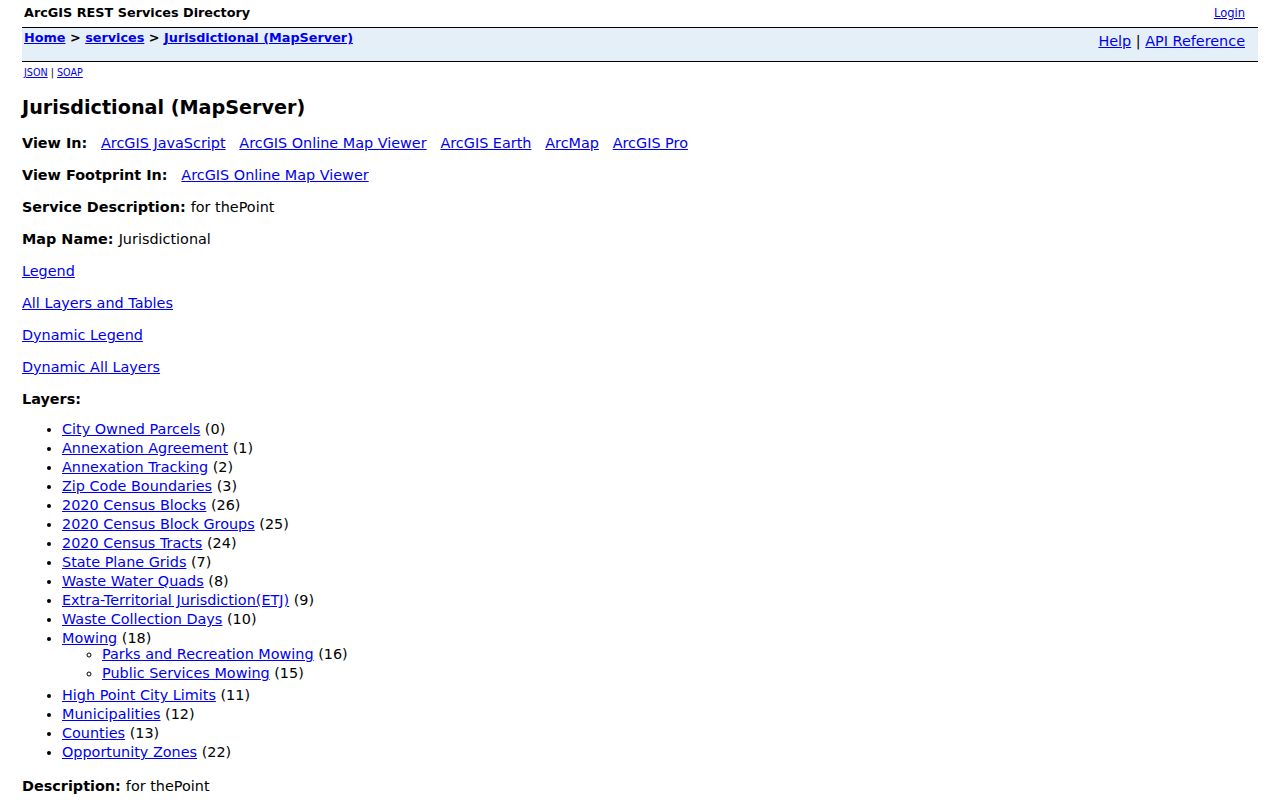
The service is a geography tool, not a list of people. It tells a searcher which local system should be asked next.
High Point Residents Property Roll Keys
Guilford's property tools are a practical first stop for a High Point residents directory search tied to land. The county's public listing offers Parcel Number, Owner Name, and Address modes. Parcel numbers allow up to seven digits with no leading zero. Owner searches work best as last name, first name and accept partial text, while an address search accepts the first three street letters or first three address digits. The companion NCPTS tool separates street number and street name and also accepts REID and PIN.
| Property search field | Observed format | Useful result |
|---|---|---|
| Parcel Number | Up to 7 digits, no leading zeros | Direct parcel route |
| Owner Name | At least 3 letters; last name, first name works best | Possible owner match |
| Address | First 3 street letters or first 3 address digits | Current parcel candidate |
| NCPTS Street # and Street Name | Separate fields; omit type and direction | Structured address result |
| REID or PIN | Parcel identifiers | Map and record cross-check |
The property record can distinguish owner, mailing address, and situs address, and may link to GIS, assessments, sale information, or a photo. It does not prove that an owner occupies the property. County notices also say data can change daily and is supplied without warranty, so retain the date of a search and confirm any important record with the county.
Guilford's property listing search displays the three primary search modes described above.
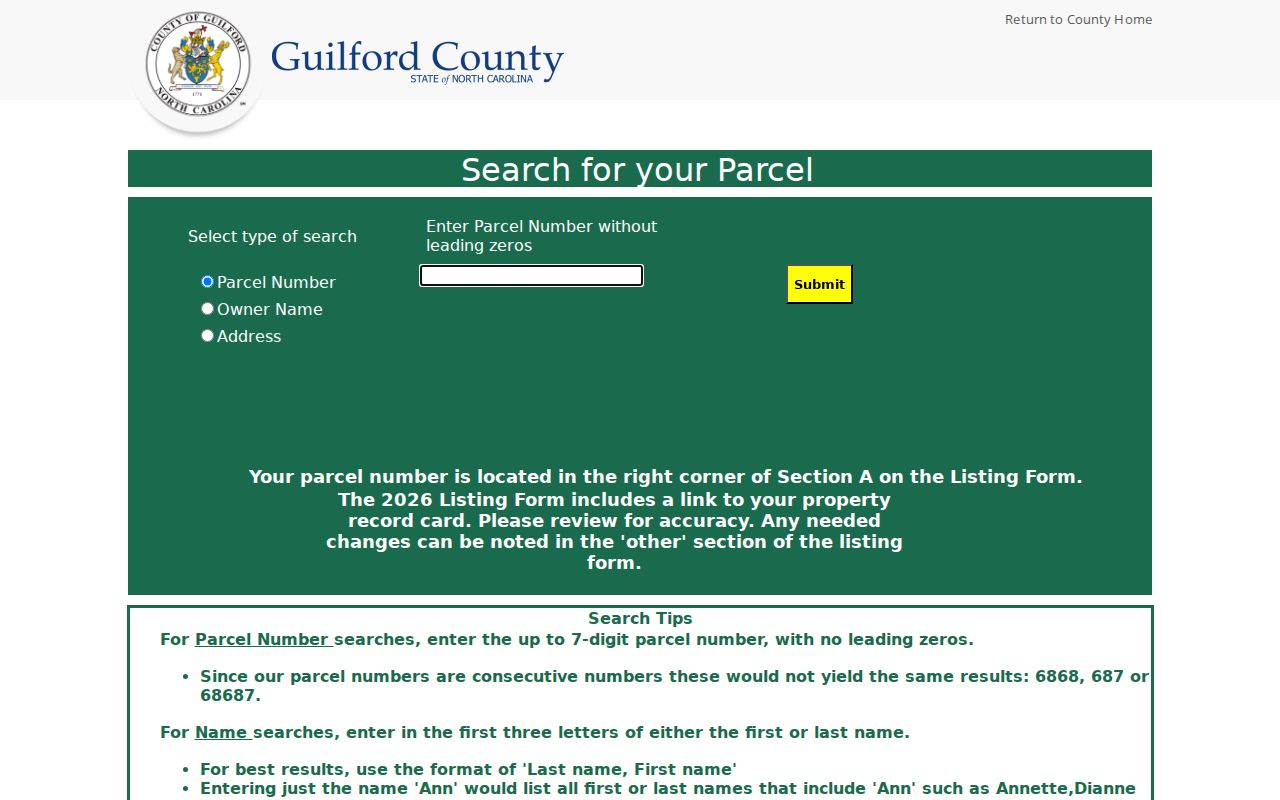
Its owner-name and address controls are useful starting points, but the map and the parcel details supply the needed jurisdiction check.
High Point Residents Voter Lookup
The North Carolina Voter Lookup is a name-first public tool. It requires first name, last name, and at least one status selection. A middle initial, year of birth, and county can narrow the result. For a common name, start broad enough to catch spelling variants, then compare address, precinct, and jurisdiction with the parcel and GIS evidence. Since High Point crosses four counties, the county filter is helpful only after the address county is known.
A public result can carry registration, address, party, precinct, district, polling-place, and participation information as the system makes available. It cannot show a ballot choice. North Carolina General Statute 163-82.10 protects full birth dates, Social Security numbers, driver-license and agency identity information, email, photo-ID copies, and protected addresses. A search that does not return a record is not a conclusion about a person. Try lawful spelling and county variations first.
The state lookup form shows the first-name, middle-initial, last-name, year, county, and status controls.
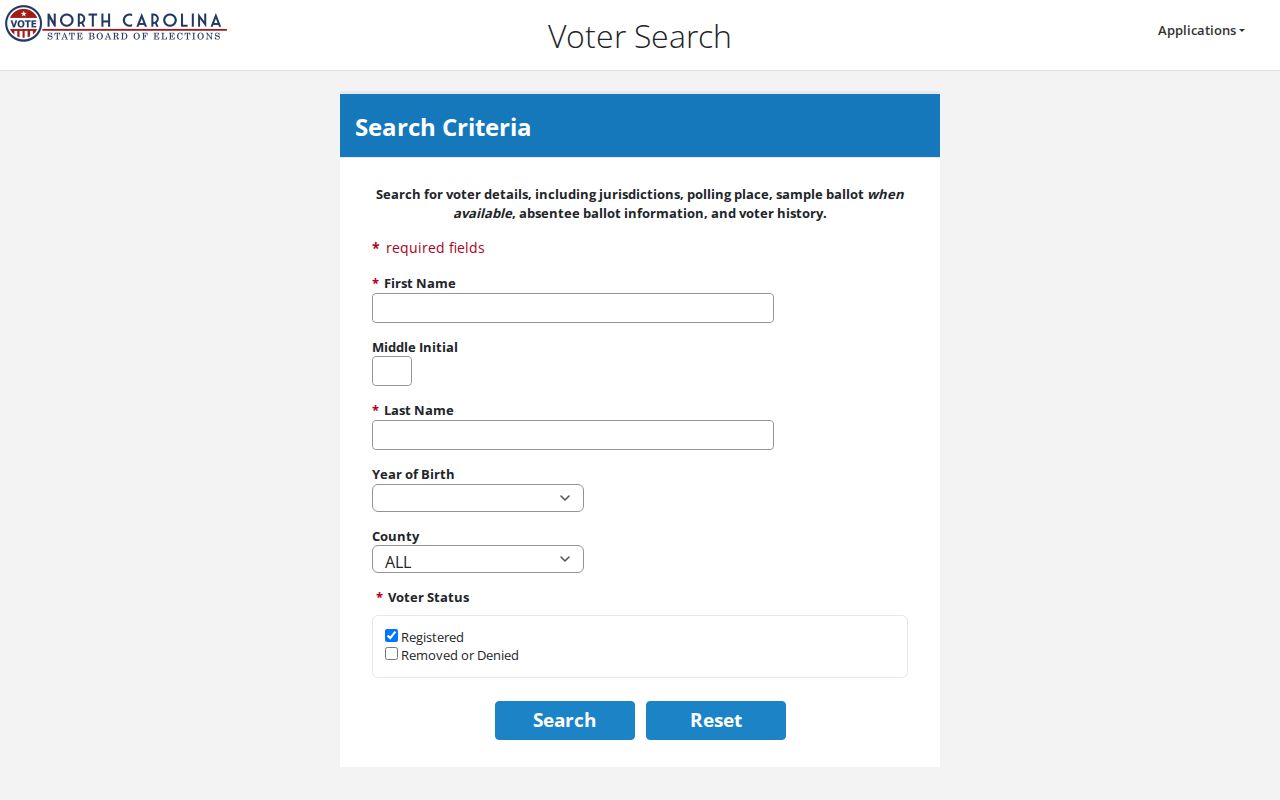
The required status choice is part of a public individual lookup, not a free street-wide export of everyone on an address.
Current High Point Residents Sources
No single current directory lists every High Point resident. Official sources each document a different relationship to an address or name. The table keeps their scope separate so a parcel owner is not confused with a registered voter, a court party, or a person served in a civil matter.
| Record source | What it can establish | Custodian | Access route |
|---|---|---|---|
| Parcel and property card | Current listed owner, mailing and situs clues | Guilford Tax / Real Property Listing | Free portal |
| Voter lookup | Public registration and jurisdiction details | NC State Board of Elections | Name and status search |
| eCourts summary | Public party, case, event, and disposition details | NC Judicial Branch | Statewide portal |
| Civil process | Service event, docket, status, and disposition | Guilford County | Current public lookup |
| Business filing | Entity role or registered office where filed | NC Secretary of State | Entity or assumed-name search |
| Local directory shelf | Historical household or business clue | Heritage Research Center | Library and digitized collections |
Use an official roll before relying on a compiled commercial profile. Such services may combine stale feeds, merge people with similar names, omit protected people, or charge for a result. They can offer a lead, not proof. The High Point resident lookup process is more useful when the question is about one specific person.
High Point Residents Court and Service Clues
The statewide North Carolina eCourts Portal is the official public route for Guilford cases. Smart Search begins with a party name or case number. The Judicial Branch guide says a party-name search uses at least three surname characters plus an asterisk, and a case-number search uses at least four characters plus an asterisk. Location, case type, status, party criteria, and filing date filters help distinguish similar names.
A public result may show case number, court location, type, status, filing or index date, public party roles, events, dispositions, judgment comments, and financial information. It is a register-of-actions style summary, not a promise that all filings are online. Sealed, juvenile, protected, and expunged matters are not public. Public access computers at a North Carolina courthouse are a free route for eligible statewide public cases, while the High Point Clerk holds the local full-file and certified-copy route.
The eCourts Smart Search screen begins with its party-name and case-number options.
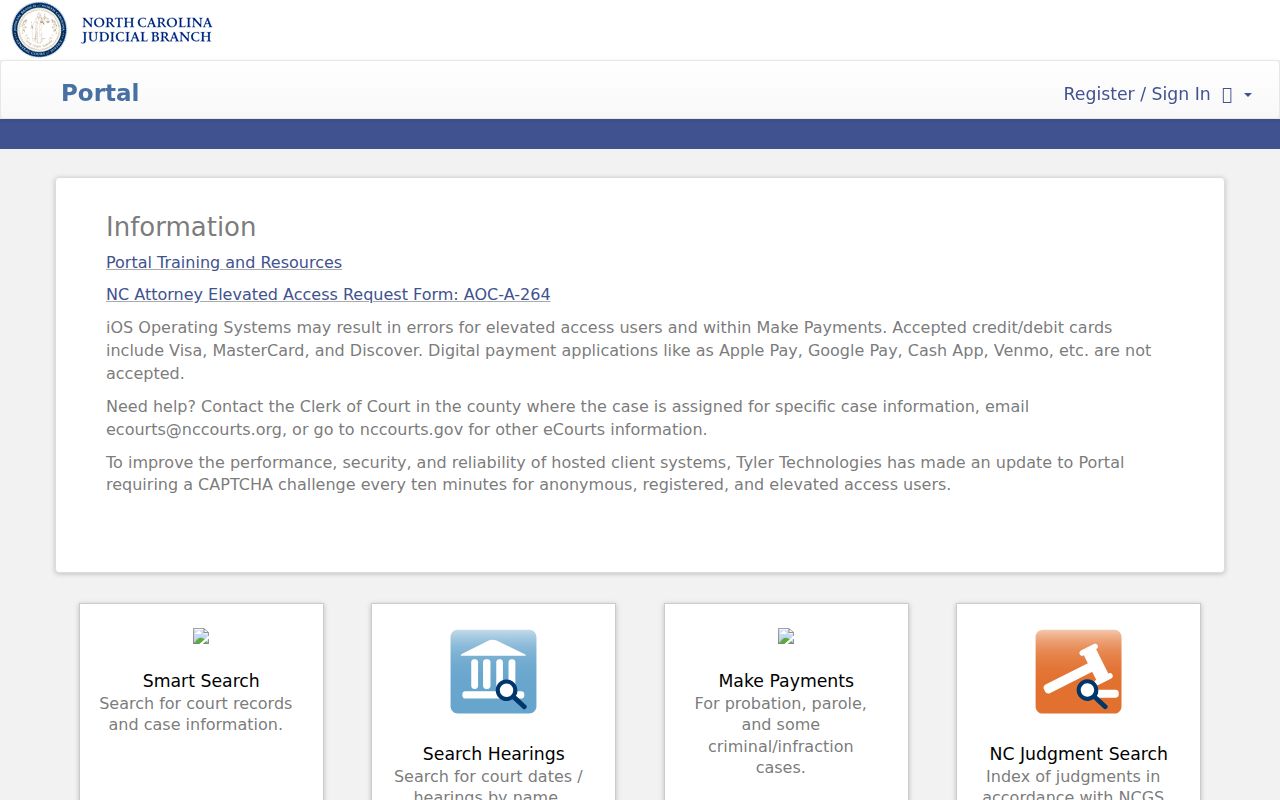
A court hit should be read for its date, court location, and party role rather than treated as a present-address statement.
Guilford's civil-process lookup offers name or business, docket, and street-number-and-name searching.
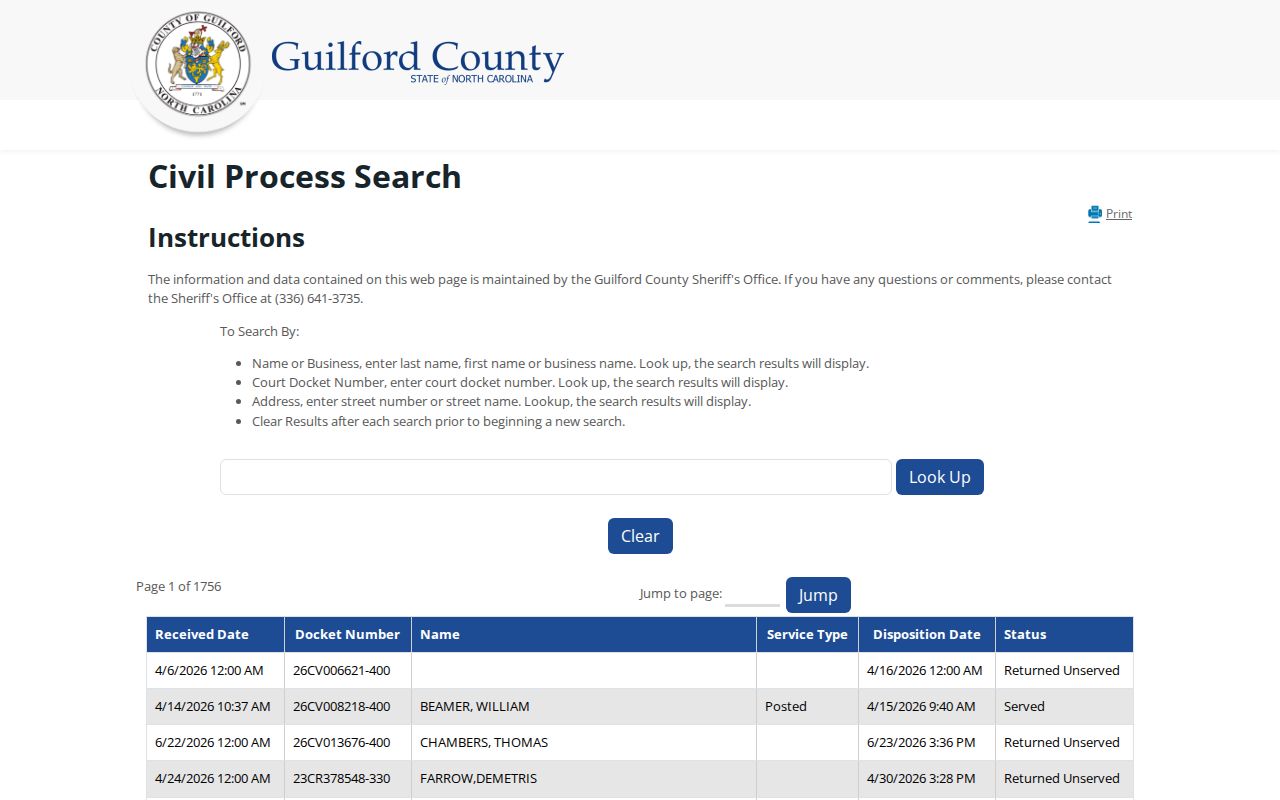
Service type, received date, status, and disposition are dated case facts, not a general directory of occupants.
High Point Residents Deed Trail
Land records are especially useful where an address has changed or a parcel has been split. Start with the property record's exact owner string and legal description, then use the Register of Deeds to find the current owner's acquisition as grantee. Read the grantor, grantee, document date, instrument reference, lot or subdivision description, and plat references. The seller can then be searched as an earlier grantee. That method keeps the chain tied to land instead of assuming an old street number will work in every index.
Guilford's Register of Deeds says its land indexes and images reach back to 1771. The county's direct live search interface did not render consistently during the research, so exact online fields, image fees, and pagination should be confirmed with the branch. A deed records a conveyance or related instrument. It does not by itself establish who lived at the address on a particular date.
- Parcel
- A mapped unit of land with an identifier used by the property and GIS systems.
- Index
- A finding tool that points to a record, often by party name, date, instrument number, or book and page.
- Criss-cross directory
- An address-arranged directory volume, if a library holds one, rather than a name-arranged volume.
- Legal description
- The lot, block, plat, subdivision, or boundary language that identifies land in a recorded instrument.
Historical High Point Residents Directories
The Heritage Research Center at High Point Public Library is the local shelf for past residents. Its published holdings include printed city directories from 1910 to the present, High Point Enterprise microfilm beginning in 1886, an obituary index, yearbooks, council minutes, vertical files, and research guides. City history identifies 1908 as the first High Point directory, while the library describes its printed run as beginning in 1910. Keep the source's wording and the volume year together rather than filling a missing year from a neighboring volume.
A directory entry is a publication-year snapshot. Where printed, it may include a name, spouse or relationship notation, occupation, business, and address, with owner, renter, or widow marks and abbreviations. It can be a strong historical clue but should be paired with a second directory year, parcel record, deed, census, obituary, or court record. The full collections treatment belongs with the High Point city directory collections.
Note: The Enterprise microfilm begins in 1886, but the Heritage Research Center describes its pre-1915 run as incomplete.
High Point Residents Vital Record Boundaries
Vital certificates are not a public residents directory. NC Vital Records lists births from 1913, deaths from 1930 with some delayed records back to 1909, marriages from 1962, and divorces from 1958. Earlier records route to the county Register of Deeds, Clerk, or State Archives depending on the event and date. A divorce certificate and the court file are also different records with different custodians.
North Carolina law limits certified copies of most non-adopted birth and death records to eligible people and authorized representatives. The research found a first search and copy maximum of $24 under G.S. 130A-93.1, with additional copies from the same search at $15. The state ordering route describes relationship, identification, payment, and delivery choices. Use an index or historic library source for family-history leads, then ask the proper custodian about a controlled certificate.
The state vital-record ordering route describes event, relationship, identification, payment, and delivery prompts before an order is made. It is designed for a certificate request, not an open public name index.
High Point Residents Records Request Route
When a city-created record is not online, High Point routes public-records requests through JustFOIA. The city says a requester does not need to give a reason or identify themselves. A useful request names the department, record type, address or project, date range, and preferred electronic format. Ask for the record itself, such as a permit file, council item, map, or correspondence, rather than asking staff to decide where a person lives.
North Carolina's Public Records Law is Chapter 132. G.S. 132-1 broadly defines public records and G.S. 132-6 says inspection may occur at reasonable times and copies are furnished as promptly as possible after lawful fees. High Point says electronic delivery is free when material can be uploaded, while listed copy charges can vary by format. Sealed court records, protected voter data, juvenile material, Social Security numbers, and Address Confidentiality Program information remain outside a general request.
High Point Residents ZIP Check
High Point ZIPs are postal clues, not municipality or county filters. The 2024 USPS Sorting and Delivery Center notice names 27260 through 27263, 27265, and 27268. Official material also preserves 27261 and 27264 as post-office box, alternate, or legacy addressing patterns. High Point University uses the distinctive 27268 postal line. None of these facts proves that an address lies in a particular county or inside the city limit.
Use USPS to confirm a delivery last line and use thePoint to check the map polygon. The property portal has parcel, owner, and address modes, not a verified ZIP-wide download mode. The voter lookup has a county choice, not a ZIP choice. Once a ZIP narrows an area, a parcel map and street search provide the defensible next step. The High Point ZIP directory separates these postal and jurisdiction questions in more detail.
High Point Residents Scam Checks
Recorded-land and tax searches can also be used to verify a suspicious notice. Guilford's Property Fraud Alert warns after a recorded filing; it does not prevent a filing, and an alert may concern a legitimate document. Review the actual instrument and contact the Register of Deeds before deciding what it means. The county Tax Department also warns about calls and letters that seek early payment through a claimed change in the law.
Use the official county page, parcel or instrument number, and office contact rather than a mailed deadline or a caller's link. North Carolina's unclaimed-property search is free through the Treasurer's official service. Public records support civic research and consumer safety, not unwanted contact or efforts to expose protected data. North Carolina's Address Confidentiality Program uses substitute addresses for eligible survivors, and protected information must not be reconstructed from scattered records.
The county's Property Fraud Alert explanation describes its warning role and its limits.
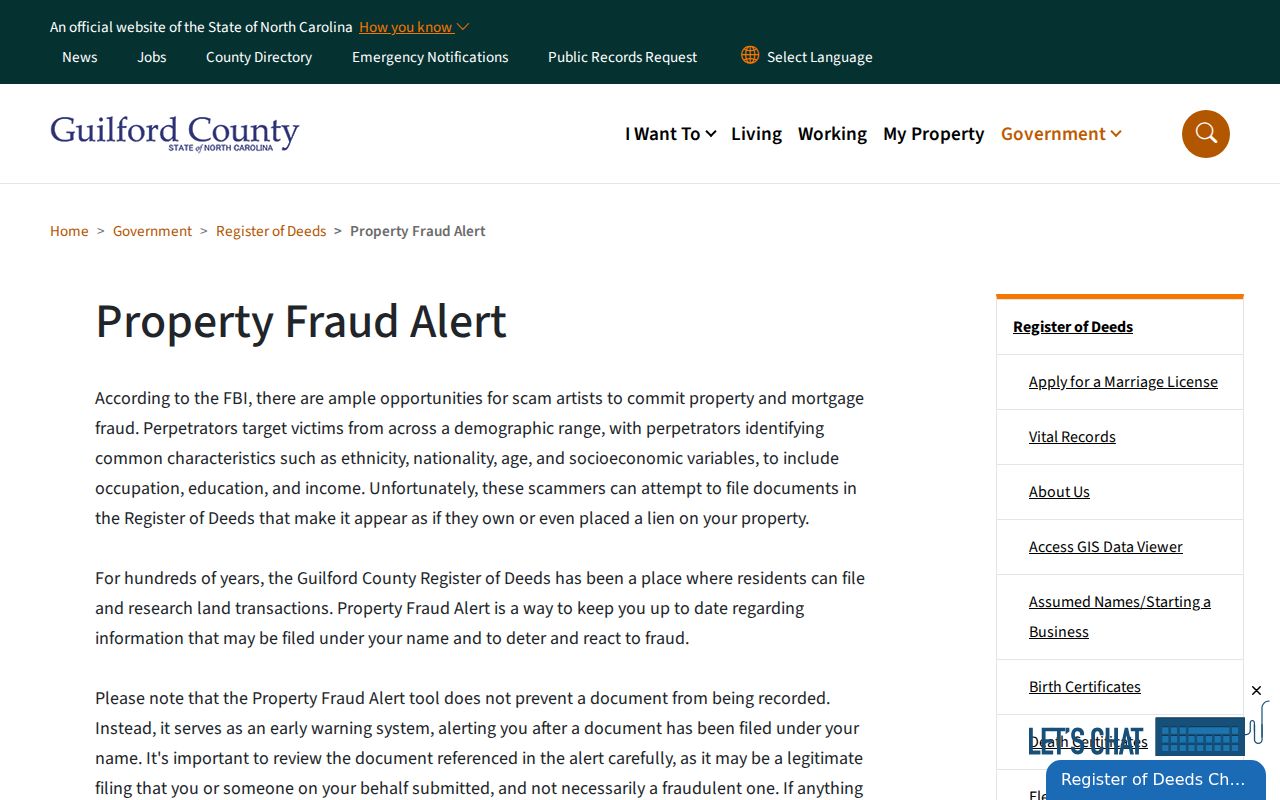
The alert is a prompt to inspect an official document and speak with its custodian, not proof of fraud on its own.